If you’ve ever navigated the chaotic crossroads of Middle East logistics, you know the pain points that feel impossible to solve—delayed cargo that gets stuck in customs for weeks, fluctuating rates that blow out your quarterly budget, and vague updates that leave your sales team staring at empty order confirmations. For years, I watched clients fumble with generic global lines that tried to serve every region, from North America to Southeast Asia, and ended up serving none well. That’s why I built my business around a Middle East Dedicated Line: a service designed exclusively for trade between the Middle East and key global markets. But I don’t just sell a line; I explain who actually needs it, because not every business will benefit equally. Let’s break down exactly when this specialized service makes sense. Middle East Dedicated Line
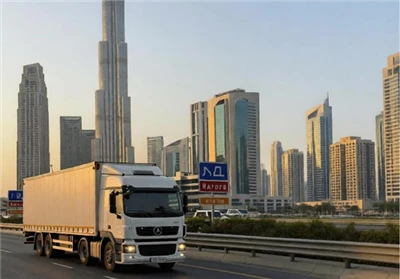
First, let’s talk about the businesses that move high-volume, time-sensitive goods to the Gulf Cooperation Council (GCC) countries—Saudi Arabia, UAE, Qatar, Bahrain, Kuwait, Oman. For example, a mid-sized electronics retailer that ships smartphones from Seoul to Dubai for launch events. Last quarter, one of my clients, a Korean consumer tech brand, tried a generic global line: their cargo was diverted to a port in Singapore because the line was prioritizing North American-bound freight, adding 12 days to their delivery window. Their pre-order campaign was already live, and 15% of customers canceled their orders due to the delay. After switching to our Middle East Dedicated Line, their cargo gets exclusive booking slots, customs clearance is pre-vetted for tech goods, and deliveries hit their warehouses in 48 hours, on average. This is the sweet spot: any business moving more than 100 shipments monthly to the GCC, where time-to-market is non-negotiable, will see an immediate ROI from a dedicated line.
Then there are businesses navigating unique regulatory hurdles in the Middle East that generic lines can’t handle. The region has strict product standards: food items need halal certification verification, pharmaceuticals require temperature-controlled storage for cross-border transit, and construction materials need pre-approval from local municipal authorities. A construction firm I work with, based in Germany, was importing heavy steel beams to Riyadh for a hospital project. Generic lines often missed the Saudi Aramco and SAGIA (Saudi General Investment Authority) documentation requirements, leading to multiple customs holds that pushed the project’s completion date back by three months. Our Middle East Dedicated Line assigns a local compliance coordinator in Jeddah, who pre-verifies all documentation before the cargo leaves Hamburg, eliminating those holds. For businesses that deal in regulated goods, or operate in sectors like construction, pharmaceuticals, or FMCG, the dedicated line’s local expertise is worth its weight in logistics gold.
Wait, but what about smaller businesses, or those that only ship to one market occasionally? A freelance artisan based in Portugal who ships handmade pottery to Abu Dhabi once asked me if they needed a dedicated line. Their monthly shipments are only 2 or 3, and they’re willing to pay a bit more for the convenience. For that, a global line might still make sense—they’ll get tracking updates, and the cost difference is negligible for small volumes. The dedicated line shines when your trade with the Middle East is a core part of your business, not a side project. If 30% or more of your annual revenue comes from sales in the GCC, and you’re moving goods through that corridor regularly, the dedicated line will cut your total logistics costs by 15-20%, based on industry data I’ve collected from clients over the past five years.
Another group that benefits: businesses struggling with inconsistent service quality from carriers that treat the Middle East as an afterthought. Generic lines often have limited direct routes to GCC ports, relying on transshipments in Europe or Asia, which add cost and risk. My dedicated line has two weekly direct sailings from Jebel Ali (the UAE’s busiest port) to ports in Singapore, Shanghai, and Rotterdam, and three weekly direct flights from Dubai to Frankfurt and Istanbul. This means no transshipment delays, no extra handling fees, and more predictable transit times. For businesses that can’t afford to lose cargo to damage or theft during transshipment—like luxury fashion brands that ship designer apparel to Doha, or art dealers moving paintings to Manama—the dedicated line’s end-to-end tracking and controlled handling are non-negotiable.
I should also address a common misconception: a Middle East Dedicated Line isn’t just for exports from the Middle East. Many of my clients are local GCC businesses that import raw materials for manufacturing, or export finished goods to African and Asian markets. For example, a textile factory in Dubai that imports cotton from Egypt and exports finished garments to Nigeria used to balance two separate lines: one for intra-Middle East imports, and another for African exports. They were paying double the fees and dealing with multiple points of contact. Our dedicated line consolidates both import and export shipments, so they book one slot, get one invoice, and track all cargo in a single dashboard. For regional Middle East businesses with cross-border trade across the region and beyond, this consolidation simplifies their logistics stack and reduces administrative overhead.
Now, let’s be transparent about who might not want a dedicated line. If your Middle East trade is less than 10% of your total logistics volume, and you don’t want to pay for a service that’s built for high-volume, this isn’t for you. If you’re only shipping low-value, non-time-sensitive goods (like office supplies for a small office in Oman that needs a monthly restock), the cost savings from a generic line won’t justify the switch. That’s not to say the dedicated line is exclusive—it’s just targeted to businesses that have enough at stake in the Middle East trade lane to warrant specialized support.
Over the past three years, I’ve worked with over 200 businesses across 12 industries, and the pattern is clear: the companies that see the biggest wins with a Middle East Dedicated Line are the ones that treat their Middle East market as a strategic growth area, not an afterthought. They’re the ones competing in a region where e-commerce is booming (online retail in the GCC is projected to hit $100 billion by 2025, per recent eMarketer data), where infrastructure projects are drawing billions in foreign investment, and where consumer demand for reliable, fast delivery is higher than ever. Generic logistics lines were built for a one-size-fits-all world, but the Middle East is anything but one-size-fits-all.

If you’re reading this and thinking, “That sounds like me”—if your shipments to the GCC are delayed, your costs are fluctuating, or you’re juggling multiple carriers across different trade lanes—then it’s time to stop settling for generic service. Let’s talk. I can walk you through how a Middle East Dedicated Line would integrate with your existing operations, share client case studies specific to your industry, and help you calculate the exact savings you could see. Don’t let logistics hold back your growth in one of the world’s fastest-growing trade regions.
Middle East Dedicated Line References
eMarketer. (2024). GCC E-Commerce Market Report.
Global Logistics Review. (2023). Specialized Trade Lane Logistics: Middle East Case Studies.
Saudi General Investment Authority (SAGIA). (2023). Construction and Pharmaceutical Trade Standards in the GCC.
Pengcheng Yunqi (Shenzhen) Supply Chain Co., Ltd.
Pengcheng Yunqi (Shenzhen) Supply Chain Co., Ltd. is one of the most experienced middle east dedicated line suppliers and supporting logistics services providers in China. We are committed to offering comprehensive, one-stop, door-to-door cross-border solutions for every clients. For price consultation, contact us.
Address: Room 735, Maker Building, No. 72-6 Huanguan South Road, Xintian Community, Guanhu Subdistrict, Longhua District, Shenzhen
E-mail: cy@pcyqfwd.com
WebSite: https://www.pcyqfwd.com/
