Hey everyone, and welcome back to the workshop—so glad you stopped by. I’m Jake, and I’ve been running this eyebolt supply operation for almost 10 years now. Every single day, I get at least a handful of messages from customers asking the same thing: “Can I use these eyebolts in a super dusty environment?” It’s such a common question, honestly, and it makes total sense. If you’ve got a job site, a factory floor, or some other spot where dust’s flying around nonstop, you don’t want to drop cash on hardware that’s gonna crap out in a month, right? Today I wanna break this down for you, lay out what I’ve learned from all the jobs we’ve supplied, and give you the real deal—not just some sales fluff. EYE BOLTS
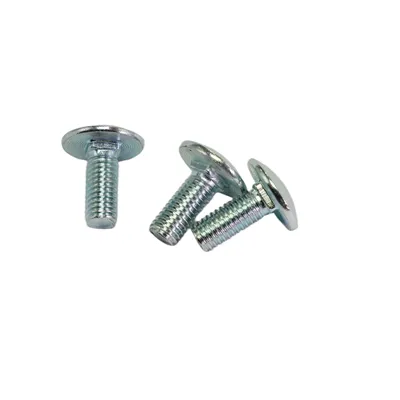
First off, let’s talk about what dusty environments actually do to metal. Most eyebolts we supply are made from either carbon steel or stainless steel—wait, no, let’s get specific: regular carbon steel (usually hot-dip galvanized for basic corrosion resistance) or 304/316 stainless. Dust, depending on the type, can be a real pain. If it’s fine, abrasive stuff—like silica dust from concrete or construction, or even heavy industrial dust from mining or woodworking—that’s the kind that gets into every tiny gap. And eyebolts? They’ve got two areas that are super vulnerable here: the threaded shank and the joint between the eye and the shank. That gap is like a magnet for dust particles. Once that grit gets in there, every time you tighten or load the eyebolt, it’s grinding against the metal surfaces, wearing them down way faster than they would in a clean space. That’s called abrasive wear, and it’s no joke. I’ve seen guys skip greasing their eyebolts in dusty mills, and within six months, the threads are so gunked up you can’t turn a wrench on ’em without stripping them.
But wait, not all dusty environments are the same. Let’s split this up a little, ’cause one size definitely doesn’t fit all here. If we’re talking about like a construction site out in the open, blowing dust from dirt or sand, that’s one thing. If it’s a woodworking shop with fine sawdust, that’s another—sawdust is actually a bit softer, but it’s still fluffy and gets into every crack. Then there’s industrial environments like cement plants or steel mills, where dust’s full of tiny, sharp metal shavings, silica, or other super abrasive particles. That’s the worst-case scenario, and you can’t treat that the same as a backyard fence, y’know?
Now, let’s get to the good stuff: can you actually use eyebolts here? The short answer is YES—if you pick the right eyebolt and take a few simple steps to maintain ’em. I’m not gonna tell you to just grab any eyebolt off our shelf and call it a day, but there are definitely options that work great in dusty spots.
First, material matters a ton. Let’s compare: hot-dip galvanized (HDG) carbon steel eyebolts are our most popular, they’re cheap and strong, but in super dusty, abrasive environments? Not the best. The zinc coating that protects them from rust can wear away fast if dust’s grinding on it. 304 stainless is better—it’s more resistant to both rust and general abrasion, so that’s a solid upgrade if you’re in a dusty, slightly corrosive environment. But if we’re talking heavy-duty dusty spots? Go with 316 stainless. It’s a bit pricier, but it’s way more durable against abrasion and even holds up better if there’s any moisture mixed with dust, which is pretty common in a lot of industrial yards. I had a customer last year who runs a gravel mine—he was going through cheap HDG eyebolts every 3 months, switched to 316, and now he’s only replacing ’em once a year. That’s a no-brainer, right?
Then there’s the coating on top of the material. We offer a lot of eyebolts with extra coatings for just this stuff. Like, if you’re in a super dusty spot, eyebolts with a phosphate coating followed by a light grease or anti-seize compound? That creates a barrier between the metal and the dust particles, so the grit can’t get in and grind away the threads or the eye joint. Wait, speaking of anti-seize—this is non-negotiable in dusty environments, in my opinion. A lot of people skip it, thinking it’s just an extra cost, but let me tell you: if you’re tightening an eyebolt with dust in the threads, you’re not just fighting friction from the metal—you’re fighting friction from tiny particles acting like sandpaper. That makes the load uneven, can cause the eyebolt to break prematurely, and makes it almost impossible to remove when you need to. We always suggest our customers apply a high-temperature, dust-resistant anti-seize to every eyebolt they use in a dusty job. It’s a 2-minute step that saves you hours of headache later.
Now, design of the eyebolt itself. Not all eyebolts are made the same. Some have a smooth, rounded thread shank that’s easier to keep clean, while others have sharp, deep threads that trap dust like crazy. We started making a few “dust-resistant” models a couple years back—nothing fancy, just a slightly tapered thread that doesn’t hold as much gunk, and a sealed eye joint that keeps dust out of the moving parts. I had a customer in a lumber mill who was dealing with sawdust getting into his eyebolts’ eye and jamming them—switched to our sealed design, and he hasn’t had a stuck eyebolt in over a year. That’s been a game-changer for him.
But wait, even the best eyebolt won’t last forever if you don’t maintain it right. This is another big part of the puzzle. In dusty environments, you gotta do regular checks. Once a month, if you’re using ’em heavily, blow off the dust with compressed air—just like you would clean a power tool. Wipe down the threads with a rag, reapply a little anti-seize, and make sure nothing’s trapped in the eye. I see guys who ignore maintenance, and even top-tier 316 stainless eyebolts will fail. Last year, a guy brought in a broken eyebolt that was supposed to be heavy-duty—turned out he’d never cleaned it, and the threads were packed so full of dust you couldn’t even see the peaks anymore. That’s avoidable, simple stuff.
Let’s get real about some common myths I hear all the time. First myth: Stainless steel eyebolts are 100% dust-proof. No, that’s not true. 316 is more resistant, but if you’ve got sharp metal dust grinding on it every day, it will still wear over time. It just takes longer than carbon steel. Second myth: You can’t use regular eyebolts in dusty environments. I’ve seen guys use HDG eyebolts in dusty construction sites for years—they just replace ’em every 6 months, which is cheaper than buying expensive stainless for a temporary job, right? It’s all about matching the eyebolt to the job’s needs. Third myth: Anti-seize isn’t necessary. I’ve pulled apart an eyebolt that was so stuck from dust and no anti-seize, I had to use a torch to get it off—totally unnecessary headache, and that eyebolt’s load rating probably took a hit from the stress. So anti-seize is non-negotiable, guys.
Now, let’s talk about some real-world examples, since that’s what I trust more than anything. We supplied a set of eyebolts to a solar farm construction team out in Arizona a couple years back. The job site was super dusty—blowing red dirt nonstop, 100-degree temps, everything covered in that fine silica dust. They started with our standard HDG eyebolts, and we suggested they use anti-seize and do weekly cleanings. Eighteen months later, they came back and ordered more—said the eyebolts were holding up way better than the cheap ones they’d used on a previous job in Nevada. Another example: a food processing plant that had a lot of fine flour dust. Flour is sticky, so it gets packed into eyebolt threads hard. We switched them to our 304 stainless with a food-grade anti-seize, and they said they used to have to replace every 2 months, now it’s every 8 months. Small adjustment, big difference.
What about when dusty environments get mixed with other stuff? Like, if there’s moisture too—common in a lot of places, dust mixed with rain or humidity. That’s a whole other layer. Dust mixed with water acts like slurry, which is even more abrasive, plus it can speed up rust. In that case, you wanna go with thicker anti-seize, maybe even a coated eyebolt that’s extra corrosion-resistant. We carry a lot of heavy-duty anti-seize that’s made for exactly that kind of wet-dusty mix, so just ask if you need it.
Now, let’s get to the stuff you should definitely avoid, okay? Don’t use eyebolts that have scratches or dents in them if you’re in a dusty environment. Scratches are like little traps for dust, and they can cause stress points that make the eyebolt break faster. Don’t over-tighten ’em—wait, no, actually tighten ’em to the correct torque, but don’t crank on ’em so hard you damage the threads. And don’t use eyebolts that are too small for the load, obviously, but that’s a general rule, not just for dusty spots.
At the end of the day, here’s the takeaway: eyebolts CAN absolutely be used in dusty environments—you just can’t treat ’em like you would in a clean office or a well-kept garage. Pick the right material for your dust type (heavy abrasive = 316 stainless, light/occasional dust = HDG or 304), add a good anti-seize, keep ’em clean regularly, and you’re good to go. I’ve been in this game long enough to know that cutting corners on hardware for dusty jobs ends up costing you way more in repairs, downtime, and replacements down the line.
Hey, if you’re working in a dusty spot and not sure which eyebolt is right for your job, hit us up. I know everyone’s got different needs—whether you’re a contractor doing a construction job, a factory manager keeping lines moving, or a small business owner fixing up equipment in a dusty workshop. We don’t do one-size-fits-all here, so just tell us about your environment, the load you’re pulling, how often you’ll be using them, and we’ll hook you up with the right eyebolt for the job. No pushy sales stuff, just straight answers from someone who’s actually used these things out in the field. If you wanna chat more, just reach out and we can work out all the details for your specific needs.
Thanks for hanging out today, and don’t forget—even in dusty spaces, good hardware and a little maintenance goes a long way. Catch you next time.
Nuts References:
- Machinery’s Handbook, 31st Edition, Industrial Press Inc., 2020, Section on Fastener Wear and Environmental Resistance.
- ASTM International, Standard Specification for Heat-Treated Carbon Steel and Alloy Steel Eyebolts, ASTM F1554-19, 2019.
- Corrosionpedia, "Abrasive Wear in Fasteners," https://www.corrosionpedia.com (accessed March 2024).
- American Welding Society (AWS), Guidelines for Lifting and Rigging Equipment, AWS D1.1/D1.1M:2020, 2020, Section on Environmental Impact on Rigging Hardware.
- Fastener Industry Association (FIA), "Selection Guide for Fasteners in Abrasive Environments," FIA Technical Bulletin 007, 2022.
Jiaxing Jinling Hardware Technolgy Joint Stock Co., Ltd.
Address: No.32, Shenjiadai, Xuyouche Village, Qinshan Subdistrict, Haiyan County, Zhejiang Province, China
E-mail: jlzxl@jinlingfstn.com
WebSite: https://www.china-nut-factory.com/
