If you’ve walked through a manufacturing, fabrication, or even maker-space facility in the last few years, you’ve likely heard two words thrown around constantly: cobots and 3D printing. For years, these technologies operated in separate lanes: cobots were the flexible, collaborative arms handling repetitive assembly or pick-and-place jobs, while 3D printers cranked out custom parts layer by layer on stationary build plates. As a cobot supplier, I get asked this question all the time: Can these two actually work together? And the short answer is yes—though it’s not just bolting a printer to a cobot and calling it a day. Let’s dive into how cobots are reshaping printing tasks, the real-world wins, the hurdles we’re still ironing out, and what this means for anyone looking to integrate both into their workflow. Cobot
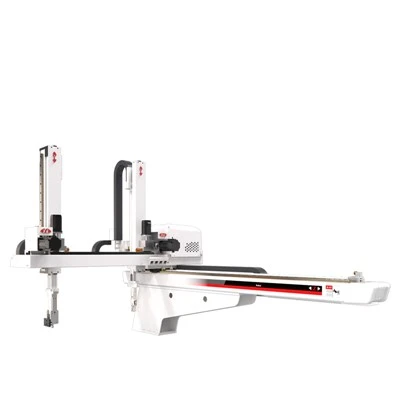
First, let’s cut through the confusion: when we talk about cobot-based printing, we’re not just referring to fused filament fabrication (FFF) desktop printers most hobbyists know. We’re talking about three core printing use cases that cobots excel at, each solving a problem traditional fixed printers can’t touch. The first and most obvious is large-format printing. Think about building a full-scale architectural model, a custom boat hull, or even a large industrial prototype. Traditional FFF printers have a fixed build volume—if you need a part that’s 10 feet long, you either print it in sections and glue it together (wasting time, risking weak seams, and introducing alignment errors) or invest hundreds of thousands of dollars in a custom gantry system. A cobot? They have a 5- to 15-meter radius of movement, no fixed build plate, and can position their extruder head anywhere within their workspace. That means you can print a single, continuous part the size of a small room, no assembly required.
We’ve already seen this play out in action at a mid-sized aerospace components shop we work with closely. They were previously printing 8-foot-long wing sections in 4 separate pieces, then spending 12 hours per part sanding, bonding, and inspecting seams. Switching to a cobot-mounted FFF extruder cut their total production time per part by 40% and reduced post-processing labor by 70%. The cobot’s flexibility also let them adjust print paths on the fly when a filament spool ran halfway through a build—something a fixed printer can’t do without pausing, resetting, and risking alignment issues.
The second use case is multi-material or multi-process printing. Fixed printers can swap extruders, but that’s a manual, time-consuming process that often introduces gaps between materials. Cobots, on the other hand, can be fitted with interchangeable tools—extruders, dispensers, laser cutters, even paint sprayers—that they can swap automatically in seconds. A medical device maker we partner with used this to print custom orthopedic braces: one extruder printed the rigid, load-bearing outer shell, another printed a flexible, shock-absorbent inner lining, and a third dispensed a gel adhesive for padding—all on the same cobot arm in a single run, no human intervention between steps. That eliminated the risk of misalignment that comes with moving a part between separate machines, and cut their brace production time from 2 hours per unit to 20 minutes.
The third, and most underrated, use case is on-site or in-situ printing. Think about repairing a damaged concrete bridge beam, printing a replacement part for a wind turbine 300 feet in the air, or even building a small structure in a remote area where transporting large equipment is impossible. Cobots are portable—they can be mounted on a mobile base, a vehicle, or even a drone in some cases—and can print directly onto a surface, no fixed build plate needed. A construction firm we’ve collaborated with used a mobile cobot to repair a section of a concrete highway barrier that had chipped after a collision. Instead of closing the lane for 8 hours while a large fixed printer was transported to the site, they set up the cobot in 20 minutes, printed the patching material directly onto the damage in 90 minutes, and the lane was reopened an hour later. That’s a game-changer for industries where downtime costs thousands of dollars per minute.
Of course, it’s not all smooth sailing. There are real challenges that stop many operations from making the switch, and as a cobot supplier, we’ve worked through most of them with our clients. The biggest one is precision. Cobots were originally designed for assembly tasks, where repeatability of ±0.1mm is standard, but printing requires far more consistency. A single deviation in the extruder’s position—even just a fraction of a millimeter—can result in a weak layer, a warped part, or a complete failed print. Early cobot printing setups often relied on external positioning systems like laser trackers to correct for small movement errors, but that adds cost and complexity. Now, newer cobot models come with built-in force-torque sensors that adjust the extruder’s position in real time as it prints, and advanced kinematic algorithms that compensate for the cobot’s own arm flex. We’ve also partnered with filament and resin manufacturers to develop materials that work better with cobot motion, since the smooth, continuous movement of a cobot is different from the stepped, incremental movement of a fixed printer’s gantry.
Another challenge is material compatibility. Traditional 3D printers use materials optimized for their specific motion profiles, and cobots don’t always play nice with them. For example, some high-strength carbon fiber filaments require a steady, uniform feed rate—something a cobot’s arm movement can disrupt if not calibrated correctly. We’ve had to develop custom calibration tools for our clients that map the cobot’s motion to the extruder’s feed rate, ensuring that material is deposited consistently. For resin-based printing, curing times need to be adjusted to match the cobot’s speed, since a fast-moving arm can leave uncured resin on the part. We’ve also started offering pre-calibrated cobot-printing packages that pair our robots with third-party extruders, dispensers, and curing systems, so clients don’t have to figure out the compatibility on their own.
Then there’s the question of skill. A few years ago, operating a cobot and a 3D printer required two separate sets of expertise: one for programming the arm, another for slicing the print file and troubleshooting material issues. Now, most cobot software has intuitive, drag-and-drop interfaces that let you program a print path without coding, and integrated print management tools that let you adjust settings in real time. But we still see a gap in training: many small manufacturers don’t have the in-house expertise to set up and maintain a cobot printing system. That’s why we offer hands-on training sessions for every client that buys our cobots for printing tasks, covering everything from basic print path programming to troubleshooting common issues like layer warping or material jams. We also have a support team that’s available 24/7 for clients who run into problems mid-print, so they don’t have to halt an entire production run.
Looking ahead, the future of cobot-based printing is even more exciting. We’re starting to see cobots that can work alongside human operators on printing tasks—one person, one cobot, printing a custom part together. For example, a maker-space could have a cobot that prints large parts while a human works on smaller, detailed components, or a workshop where a cobot dispenses material and a human adjusts the part’s shape mid-print. We’re also testing cobots that can print with multiple materials in a single layer, creating parts with complex internal structures that were previously impossible to make. Imagine a custom prosthetic that has a rigid outer shell, a flexible inner lining, and integrated sensors all printed in one piece—something that would take weeks to make with traditional methods, but can be done in hours with a cobot.
For small businesses and independent makers, cobot-based printing is also more accessible than ever. A few years ago, a cobot cost tens of thousands of dollars, but now you can get a compact, 6-axis cobot with a print setup for under $10,000. That’s a fraction of the cost of a large-format fixed printer, and it’s flexible enough to be used for other tasks when you’re not printing—like assembling parts, packaging, or material handling. We’ve even worked with small woodworking shops that use their cobot for both cutting custom signs and printing small wooden parts, getting two uses out of one investment.
So, is it worth it? For most operations, the answer is yes—if you have specific printing needs that fixed printers can’t meet: large parts, multi-material components, on-site repairs, or the ability to repurpose equipment for other tasks. The key is to work with a cobot supplier who understands both robotics and printing, so you don’t end up with a setup that’s more hassle than it’s worth. At the end of the day, cobots don’t replace traditional printers—they complement them. A small desktop printer is still the best choice for a 3-inch prototype, but a cobot is the best choice for a 10-foot custom part, a multi-material medical device, or an on-site repair.
If you’re thinking about integrating cobots into your printing tasks, don’t try to reinvent the wheel. Reach out to a supplier who can help you assess your workflow, identify the right use cases, and set up a system that’s tailored to your needs. Whether you’re a small maker looking to expand your capabilities, a manufacturer needing to cut production time, or a construction firm looking for a better way to do on-site repairs, cobot-based printing is a flexible, scalable solution that’s only going to get better as technology advances.
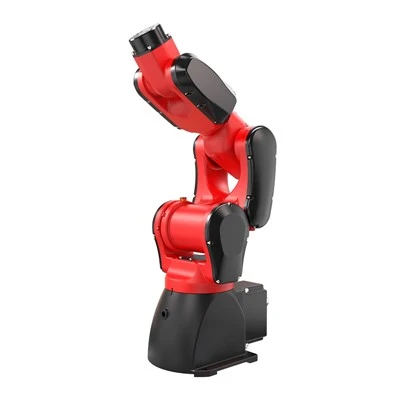
Now is the time to stop seeing cobots and printing as separate technologies and start seeing them as a powerful team. The only question left is: what will you build first? If you’re ready to explore how cobots can transform your printing tasks, contact our team to start a procurement discussion to find the right solution for your operation.
Pick and Place Robot References:
- International Federation of Robotics. (2023). Collaborative Robots in Additive Manufacturing: Global Market Trends and Applications.
- ASTM International. (2022). Guide for Robotic Additive Manufacturing Processes for Large-Scale Components.
- Journal of Manufacturing Systems. (2021). "Flexibility and Efficiency of Collaborative Robots for Multi-Material Additive Manufacturing." Vol. 58, pp. 247-258.
- Wohlers T. (2023). Wohlers Report 2023: Additive Manufacturing and 3D Printing State of the Industry. Wohlers Associates.
- Robotics Industry Association. (2022). Safety Standards for Collaborative Robots Used in Additive Manufacturing Environments.
Robotic Technology (GD) Co., Ltd.
Robotic Technology (GD) Co., Ltd. is one of the most experienced cobot manufacturers and suppliers in China, also supports custom service and one year warranty. Please feel free to wholesale CE approved cobot for sale here from our factory. Contact us for quotation.
Address: Room 102, No. 30,Hengfeng 2nd Road,Daguo, Changping Town, Dongguan City,Guangdong,China
E-mail: admin@iroboticplus.com
WebSite: https://www.rb-tic.com/
