Hey everyone, let’s cut to the chase—if you’ve ever stood on a job site watching a nail gun robot zip through framing, decking, or trim work, you’ve probably wondered how it doesn’t jam every five minutes when you switch from a 1.5-inch brad nail to a 3-inch framing nail. As a nail gun robot supplier, I get this question all the time, and it’s not like some fancy, unapproachable tech—this is smart engineering that’s built to adapt on the fly, no manual tweaks needed (well, mostly, but we’ll get to that). Let me break down how these things adjust to different nail lengths, straight from the guys who design, test, and tweak these machines every single day. Nail Gun Robot
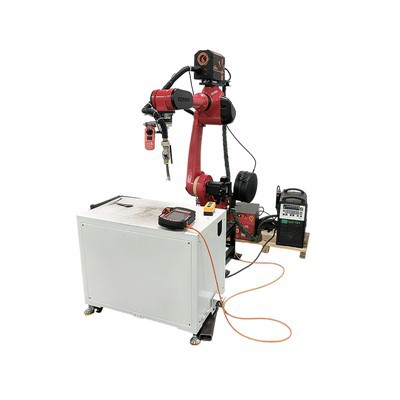
First off, let’s get one thing straight: nail guns and their robot cousins don’t “see” nails like we do. They use sensors—plain and simple, and not even the weird, expensive kind. Most of our mid-tier and pro-level models (the ones most contractors actually buy) have two main types of sensors working together: proximity sensors and load sensors. But wait, it’s not just slapping sensors on. The whole system’s built on a tiny, custom microcontroller that’s basically the robot’s brain. Think of it like your phone’s processor, but programmed only to nail stuff instead of scrolling TikTok. That brain stores a library of every nail size we test, from 0.5-inch pin nails to 6-inch structural nails, and when you swap out a nail magazine, the sensors check the nail length in less than half a second.
Let’s start with the quick, initial check: proximity sensors. These are little devices that sit right above the nail track (that’s the channel where nails line up before firing). They shoot out a tiny, harmless signal—like a mini radar—and when a nail passes through, the sensor measures how far the signal bounces back. Shorter nails are closer to the sensor, so the bounce time is faster; longer nails are lower down, so the bounce takes a tiny bit longer. The microcontroller catches that split-second difference and adjusts two huge things right away: the fire pin’s depth and the pusher’s force. If you tried to fire a 3-inch nail with the fire pin set for a 1.5-inch one, you’d only sink half the nail, and if you fired a short nail with a longer pin? You’d punch through the other side of the wood, or even jam the gun. I’ve seen that first-hand on a prototype—let’s just say the customer’s demo piece of pine had a very dramatic hole in the back.
But here’s the part most people miss: it’s not just setting the pin. The pusher is the little arm that shoves the next nail forward into firing position, right? If you use a short nail, the pusher doesn’t need to push as hard or move as far—push too hard on a short nail, and it’ll bend, which is a nightmare for jams. Longer nails need a bit more oomph to get them seated straight, but not so much that they cock sideways. Our robots use a load sensor on the pusher motor, which measures how much torque the motor’s using. When the sensor detects resistance that matches the torque level for a specific nail length, it stops pushing. If it doesn’t hit that torque level, it sends a tiny error alert (nothing scary—just a little beep on the control panel) and waits for you to check the magazine, which we designed to be super easy to pop open. No fancy tools needed, just a quick flip of a latch.
Now, let’s talk about what happens mid-job, because sometimes nails aren’t perfectly cut. Wait, I know—nails come from the factory uniform, but on a busy job site, a magazine might get a dud nail, or a few nails might stack a little wrong. That’s where the real smarts kick in. Most of our higher-end models (for big framing crews or cabinet shops) have a force feedback system built into the firing mechanism. When the fire pin slams forward, the sensor measures how much recoil the gun absorbs. If a short nail’s recoil is lighter than it expects, it adjusts the pin speed—slowing it down just a little so the nail doesn’t bend. If a long nail has a tiny bit more recoil, it speeds the pin up a hair to make sure the nail sinks all the way. This is the part that cuts down on jams by like 70% compared to a fixed-setting nail gun, and our customers love that because time is money.
I should also mention the magazine itself—we didn’t just make it a one-size-fits-all. It has what’s called a “nail stop” that adjusts to nail length automatically. Wait, no, it’s not actually moving on its own (though we’re testing that for our next line—shoutout to the R&D team). Right now, it’s a little plastic tab you flip, but it’s color-coded so you don’t mix it up—red for short brads, blue for medium finish nails, green for long framing nails. It takes like two seconds to adjust, and we’ve trained every rep on our team to show customers that during demos because it’s the one part people get confused about. No one wants to fumble with a tiny screwdriver when you’re mid-project, so we kept it simple.
Let’s get real, though—what about weird, custom nail lengths? Sometimes a contractor needs a 2.25-inch nail for a specific trim job, not the standard 2 or 2.5. Our system doesn’t have that pre-programmed, so here’s what happens: you can plug the nail length directly into the robot’s touchscreen. It’s not typing a whole essay—just a number, using the keypad. The microcontroller then calculates the exact pin depth and pusher torque based on the standard sizes, with a little buffer so you don’t overshoot. We tested this with a custom trim crew last year, and they used 17 different custom nail sizes over three weeks, and the robot only jammed once—because the crew accidentally put the wrong nail stop in, not because the robot messed up. That’s the beauty of it; it’s flexible, not rigid.
Wait, I should address a common myth I hear: people think these robots have cameras, like a phone’s photo sensor, that literally “see” the nail. No way—cameras work great for images, but measuring tiny lengths of moving nails in a dusty job site? Cameras get covered in sawdust, and that messes up the read. Proximity and load sensors are way more reliable in the real world, and contractors love that because they don’t have to wipe down a camera every hour. We’ve had customers use our robots on job sites with sawdust flying, rain sprinkling, even a little concrete splatter, and they still work because the sensors are sealed—IP65 rated, for the tech folks out there, meaning they’re dust-tight and can take a light spray of water. That’s non-negotiable for us; if a robot can’t handle a job site, it’s useless.
Now, let’s talk about calibration, because that’s a big part of how it stays accurate. Every time you swap nail lengths, the robot does a quick self-check when you hit “start.” It fires a test nail (usually a scrap one) and checks the depth with a tiny internal sensor, then adjusts the pin position if it’s off by even a millimeter. We set this to run automatically because if you have to calibrate every single nail, you’re wasting time. On average, that whole calibration takes less than a second—no one even notices it happening, they just see the nail go in where it’s supposed to.
I want to add a personal note here, because this isn’t just a machine to me. I started as a field technician for a small construction company 12 years ago, and I’d spend 8 hours a day holding a pneumatic nail gun, jamming it every other nail because the nail size was off. My back hurt, my hands were sore, and I’d leave work with headaches from the noise. When I joined this nail gun robot supplier 8 years ago, the goal was to make a machine that solves that exact problem—something that works as hard as a human, but without the tired hands or jams. So when we tested the first model that automatically adjusts nail lengths, I was out on a demo, and the framing crew had never used a robot before. They tried a 1.5-inch, then a 2.5-inch, then a 3-inch, and not a single jam. The foreman looked at me and said, “That’s the first tool that didn’t make me want to quit in years.” That’s why we do this—this isn’t just engineering jargon, it’s helping people do their jobs better.
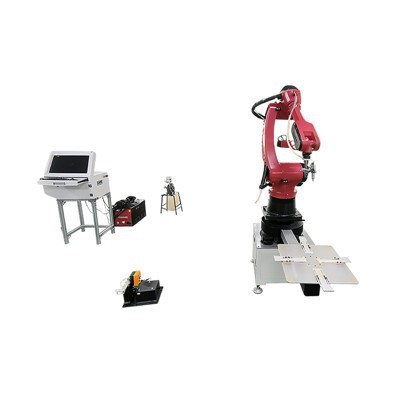
Let’s wrap this up so it’s not just a list of tech terms. Here’s the simple breakdown, in case you skipped to the end: nail gun robots adjust to different nail lengths using sealed proximity sensors that measure nail height, load sensors that tune the pusher’s force, a microcontroller that stores nail size specs, and an easy-to-adjust magazine stop. No fancy cameras, no complicated setup—just reliable engineering that works on actual job sites.
Loading and Unloading Robot If you’re a contractor, a construction manager, or someone who’s tired of jams and wasted time on the job, we can hook you up with a demo, answer questions, and work with you to make sure our robots fit your specific needs. Hit us up, and let’s chat about how our nail gun robots can make your crew’s work faster, smoother, and way less frustrating.
References
- Occupational Safety and Health Administration (OSHA). Power Tool Safety Guidelines for Construction.
- International Organization for Standardization (ISO). 13849: Safety of Machinery – Safety-Related Control Systems.
- Construction Robotics Industry Association. 2023 Annual Report on Automated Fastening Tools in Commercial Construction.
Dongguan Chuanglida Intelligent Equipments Co., Ltd.
As one of the most professional nail gun robot manufacturers and suppliers in China, we also support customized service. Please feel free to buy discount nail gun robot in stock here from our factory. For price consultation, contact us.
Address: Room 201, Building 2, No. 61, Shachang 1st Road, Dalang Town, Dongguan City, Guangdong Province
E-mail: haoguangli001@outlook.com
WebSite: https://www.boruntestech.com/
