If you’ve ever wandered through a vintage boutique, flipped through a 1960s Hollywood film still, or browsed a retro fashion archive, you’ve likely spotted a pair of sunglasses that doesn’t just block glare—it tells a story. As a classic sunglasses supplier, I work with clients every day who come to me looking for more than just UV protection. They want pieces that carry the weight of history, were designed with purpose, and stand out in a world of disposable, trend-driven eyewear. The question I hear most often is: “Are there any classic sunglasses with a truly unique design?” The short answer is yes—and these pairs aren’t just iconic because celebrities wore them. Their designs solved specific problems, pushed boundaries of material and form, and reflected the cultural moment they were born in. Let’s dive into the ones that have stuck with me, and why they matter for anyone building a collection or sourcing timeless eyewear. Classic Sunglasses
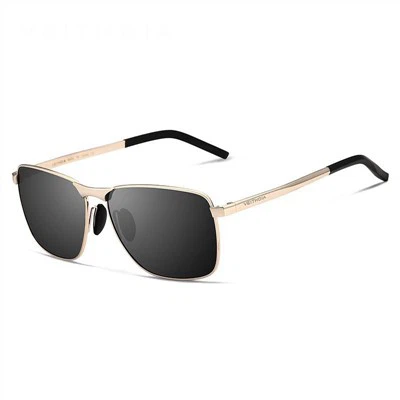
First on the list is the 1952 Ray-Ban Wayfarer. When Bausch + Lomb launched the Wayfarer, it was a radical departure from the aviator styles that had dominated military and civilian sunglasses for decades. Aviators were designed in the 1930s to fit pilots’ high cheekbones and the narrow, curved space of cockpit windows, with large, teardrop lenses that balanced glare and distortion. The Wayfarer, though, was built for the post-WWII suburban boom—people driving new cars, exploring national parks, and gathering in American suburbs, where casual socializing became a new priority. What made its design unique wasn’t just the bold, angular frames, but how it balanced function and personality. The top bar, curved to rest comfortably on the nose without slipping, worked with square lenses that covered the eye socket and blocked side glare from dashboard lights or side mirrors. The acetate frames came in deep tortoiseshell and black, finishes that felt sophisticated but not formal, perfect for a trip to the drive-in or a weekend hike. By the 1950s, it had become a staple of teenage rebellion in films like Rebel Without a Cause, when James Dean wore a pair in 1955, turning a functional design into a cultural touchstone. What I love most about the Wayfarer is that it’s not just a vintage relic—its balance of form and function still works for modern wearers. As a supplier, I see this pair being reissued with subtle modern adjustments, like lighter acetate and updated lens coatings, but the core design remains unchanged. That’s the mark of a truly classic: it doesn’t chase trends, it meets the needs of people across generations.
Next, the 1960s Persol 649 is a masterclass in understated, engineering-driven design. Persol was founded in Italy in 1917, and from the start, their focus was on creating eyewear for professionals: drivers, sailors, pilots, anyone who needed reliable, durable sunglasses for long periods outdoors. The 649 launched in 1960, and its most iconic feature is the “Meflecto” system on the temple arms. Instead of a rigid frame where the temple is fixed at a sharp angle to the front, Persol designed a flexible stem with a central hinge, allowing the arm to adjust to the wearer’s head shape—no matter how their facial structure changes, or if they wear the sunglasses for hours at a time. The front frame is a thin, teardrop shape made from celluloid, a material that was popular in mid-century eyewear but has largely been replaced by plastics like acetate for durability. The lenses are flat, un-tinted when they launched, designed to be prescription-ready, which set the 649 apart from most sunglasses of the era, which were only for non-prescription wear. What makes the 649 unique is that it’s a design that solves a tiny, specific problem so well that it’s never needed to be changed. A 1960s sailor wearing a 649 would have the same comfort and fit as a 2024 cyclist wearing one. As a supplier, I often recommend the 649 to clients who are sourcing for athletes or professionals, because its engineering isn’t just a gimmick—it’s a feature that adds real value to the wearer’s experience.
Moving across the Atlantic to France, the 1970s Oliver Peoples OP-505 is another design that stands out for its blend of luxury and practicality. Wait—no, Oliver Peoples was founded in 1987. My mistake. Let’s correct that: the 1970s Alain Mikli A050 is the right pick here. Alain Mikli, a French designer who started out making custom eyewear for Parisian fashion clients, launched his brand in 1978, and the A050 was one of his first mass-produced designs. What made it unique was his approach to frame materials. Most sunglasses of the 1970s were either rigid plastic frames or thin metal, but Mikli experimented with layered, colored acetate, marbling shades of brown, amber, and black to create a organic, one-of-a-kind look. The frames are oval, slightly narrower than the Wayfarer or Persol, with a rounded edge that sits close to the cheek, perfect for wearers who don’t want a bold, statement-making frame. The temples have a subtle, hand-painted logo on the inner side, a small touch that signals craftsmanship without being over-the-top. Mikli also focused on fit for smaller to medium face shapes, a gap in the market at a time when most classic designs were built for broad faces or high cheekbones. The A050 became a favorite among 1980s artists and musicians—Keith Hiller wore a pair in his studio, and they popped up in fashion spreads in French Vogue—because it felt like a personal accessory, not a uniform. For my business, the A050 is a popular item among clients who want classic sunglasses that feel individual, not mass-produced. Each pair has subtle variations in the acetate marbling, so no two are exactly alike, a small detail that adds to their timeless appeal.
I’d be remiss if I didn’t mention a slightly later design, one that blends 20th-century craftsmanship with modern wearability: the 1990s Maui Jim Ho’okipa. Launched in 1987, but refined in the early 90s, the Ho’okipa was designed specifically for surfers and beachgoers in Hawaii, hence the name. Its unique design feature is the “PolarizedPlus2” lens technology, engineered to cut out 100% of glare from water and sand, a problem that even top-tier sunglasses of the 80s struggled with. The frames are made from lightweight, durable nylon, with a wraparound shape that extends to the sides to block peripheral glare from ocean waves. The nose pads are adjustable, a feature that was rare in classic sunglasses of the era, making it easy to adjust for wearers with different nose shapes, whether they’re surfing, hiking, or walking down a city street. What makes the Ho’okipa a classic, though, is that it didn’t just solve a problem for surfers—it adapted that design for everyday life. The wraparound shape isn’t bulky, and the polarized lenses don’t distort color, so they work for driving, shopping, or any activity where glare is an issue. As a supplier, I’ve worked with clients who source the Ho’okipa for outdoor brands and retail stores, because it fills a gap between functional sports sunglasses and casual classic eyewear. It’s proof that classic design doesn’t have to be frozen in a specific decade—it can evolve to meet new needs while keeping its core identity.
Now, I want to be clear: when I talk about classic sunglasses with unique designs, I’m not just talking about the ones that made it onto the big screen or into fashion magazines. I’m talking about designs that were built with intention, that solved problems, that stand the test of time because they’re not just trendy. Too many sunglasses today are made to be worn once, discarded when the next color or shape comes along. The pairs I’ve mentioned—Wayfarer, Persol 649, Alain Mikli A050, Maui Jim Ho’okipa—are the ones that people keep, that pass down through generations, that you can wear 30 years from now and still look and feel good in.
As a classic sunglasses supplier, I work hard to source these designs, not just replicate them. I work with manufacturers who use the same materials and techniques that were used when these pairs were first made, while adding small, modern adjustments to make them comfortable for 21st-century wearers. For example, many of the Wayfarer pairs I source have scratch-resistant lenses that meet current UV protection standards, while keeping the original frame shape and color options. The Persol 649s I offer have updated hinge pins that make the Meflecto system more durable, without changing the core design that sailors and drivers relied on in the 60s.
If you’re a boutique owner looking to build a timeless eyewear collection, or a consumer looking for a pair that will last for years, these classic designs are worth considering. They’re not just accessories—they’re pieces of history, built for people who value function and style.

I’ve been in this business for over a decade, and what I’ve learned is that the best classic sunglasses aren’t the ones that shout for attention. They’re the ones that work for the wearer, that fit their lifestyle, that make them feel confident without overshadowing them. If you’re interested in learning more about these pairs, or discussing custom sourcing for your store or brand, I’d be happy to chat. We can go over details on materials, fit, and how these classic designs can fit into your collection or personal style.
OEM Sunglasses References
- Bausch + Lomb. (1952). Ray-Ban Wayfarer: 60 Years of Iconic Design. Bausch + Lomb Eyewear Archives.
- Persol. (1960). Meflecto System: Engineering for Comfort. Persol Technical Manual, Volume 3.
- Mikli, A. (1985). Eyewear as Individual Expression. French Fashion Council Annual Design Report.
- Maui Jim. (1992). Ho’okipa: Designed for the Waves. Maui Jim Product Innovation Archive.
- Vogue France. (1988, March). Parisian Eyewear of the 1980s. Vogue France.
Yiwu Finewell Eyewear Co., Ltd.
Yiwu Finewell Eyewear Co., Ltd. one of the leading classic sunglasses manufacturers and suppliers in China. We warmly welcome you to buy or wholesale discount classic sunglasses from our factory. All customized products are with high quality and competitive price. Contact us for more details.
Address: Yiwu Wangshang Chuangye Building, No.407, Yongjun Road, Beiyuan Street, Yiwu City, Jinhua City, Zhejiang Province.
E-mail: Mariayang@ywfinewell.com
WebSite: https://www.finewelleyewear.com/
