When I first started working with Cabinet LED drivers over a decade ago, I’d often get calls from small shop owners, electricians, and even DIY renovators asking one specific question: “Can this driver handle the power I’ve already got running through my walls?” Back then, I didn’t realize how many people overlook input voltage requirements when picking a cabinet LED driver—they’re so focused on brightness and color temperature that the technical specs end up causing headaches. As a supplier who’s built our business around matching drivers to actual installation needs, I’ve learned that getting the input voltage right isn’t just a box to check; it’s what keeps your cabinet lights working, no flickering, no dead bulbs, no mid-renovation panics. Cabinet LED Driver
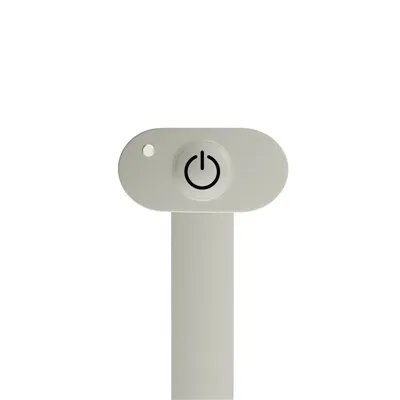
Let’s break this down simply: the input voltage for a Cabinet LED driver is the electrical current it pulls from your building’s main power supply to convert into low-voltage power for your LED strips, puck lights, or under-cabinet fixtures. Get this number wrong, and you’re looking at either a driver that can’t produce enough power (so your lights are dim and inconsistent) or one that fries itself—or even your LED lights—because it’s running on a voltage it wasn’t built to handle. That’s why, after 12 years of installing drivers and troubleshooting for customers, I always start conversations with: what’s your building’s standard line voltage, and where is the cabinet located?
For most commercial and residential spaces in North America, that’s 120V AC, the kind you plug lamps and small appliances into. But I’ve seen so many people show up with a 24V LED strip and a driver made for 120V, or vice versa, because they mixed up input and output specs. A common mix-up I run into: someone buys a cheap online driver labeled “LED driver” without checking the fine print, only to find it’s built for 277V, the kind used in office buildings, not their small home kitchen. That’s a wasted purchase, right there. Even in Europe, where 230V AC is standard, I’ve had clients from industrial warehouses asking for drivers that work on 480V, because their cabinet is part of a larger manufacturing line’s power supply. That’s why we never skip asking about the actual site’s power infrastructure, not just what’s listed on a product page.
Then there’s the hidden variable people rarely think about: voltage drop. If your cabinet is in a remote workshop, or even a second-floor closet where the wiring is old, the voltage you measure at the outlet might not be exactly the standard number. I once had a customer in a historic home who swore his kitchen ran on 120V, but when we tested the outlet with a multimeter, it was only 112V—old, corroded wiring was pulling down the voltage. If we’d installed a driver rated for a tight 115V to 125V range, it would have shut off randomly, leaving him with half-lit cabinets for a week. That’s why our standard Cabinet LED drivers have a wide input voltage range: 100V to 240V AC, which works for most residential, retail, and small commercial spaces, even if the wiring’s a little off. We designed that range after years of seeing customers deal with wonky old building wiring—no one wants to return a driver because their outlet isn’t perfect.
Wait, let’s distinguish between AC and DC here, because that’s another area of confusion. The input to a Cabinet LED driver is always AC (alternating current) from the wall, but the output is DC (direct current) for LEDs—LEDs can’t run on AC, which is why the driver exists in the first place. A lot of new installers mix up input AC voltage with output DC voltage, thinking if their LED strip is 12V DC, the input should be 12V. That’s a costly mistake. I had a handyman come to me last spring panicking because he’d wired a 12V LED strip directly to a 120V outlet, and the strip had burned out in 10 seconds. “Why didn’t a driver work?” he asked. Because he’d bought a driver with the wrong input voltage—he’d grabbed a 12V DC power supply meant for a small robot, not a 120V AC input driver for cabinets. That’s the line we walk as suppliers: explaining that input voltage is about your wall’s power, not the LED’s required output.
Another angle: dimmable vs. non-dimmable drivers. I can’t tell you how many times someone buys a dimmable driver without checking its input voltage compatibility, only to find their dimmer switch doesn’t work because the driver’s input isn’t rated for the kind of dimmer they have. Most of our dimmable Cabinet LED drivers are rated for the same 100V to 240V AC input range, but some of the cheaper dimmers you pick up at a big box store are only designed for incandescent bulbs, not LEDs. We always recommend pairing a dimmable driver with an LED-specific dimmer, but I also make a point of noting which drivers work with both 120V and 240V inputs—so if a client is relocating their cabinets from a home to a retail space overseas, they don’t have to swap the driver. That flexibility is a big selling point for both small contractors who work on multiple projects and homeowners who might renovate later and change the room’s wiring.
Let’s talk about sizing, because input voltage ties directly to the power (watts) the driver needs to supply. Watts are volts times amps, so if your input voltage is lower, you need a higher amp driver to get the same output wattage, and vice versa. For example, a 24W LED under-cabinet light kit: at 120V input, that’s about 0.2 amps, so a 25W driver is perfect. But if you’re working with 240V input, that same 24W kit only needs about 0.1 amps, so a smaller driver works. But if someone uses a 120V driver rated for 10W on a 24W LED kit, even if the voltage is right, it’s going to overheat and die in a month. That’s why our team always does a quick pre-quote check with customers: “What’s your input voltage, and how many watts of LED load do you have?” It’s not enough to just get the voltage right—you have to make sure the driver can handle the power draw, regardless of input.
I also want to address a common myth I hear all the time: “Higher input voltage is always better.” That’s not true. If your wall is only pulling 110V, a driver rated for 110V to 277V will work fine, but a driver that only works at 240V will cut out. But for spaces with variable power—like food trucks, which move between different power sources when they’re parked or at a commissary—our wide-input drivers are a game-changer. I recently worked with a food truck owner who was installing cabinet lights for his display cases; he was jumping between 110V outlets at his commissary and 220V generators when he’s at events. Our 12W Cabinet LED driver with a 100V to 240V input range worked for both, so he didn’t have to carry two different drivers. That’s the kind of practical solution we build our business around, not just selling a standard driver and moving on.
What about for niche applications? We don’t just supply drivers for home kitchens. I’ve had clients build custom display cabinets for art galleries, where the cabinets are lit with sensitive LED lights that need consistent power. Those spaces often have 208V AC input for their lighting circuits, so we make sure our drivers are rated to handle that, too. Even outdoor cabinet displays, like for a retail storefront, need input voltage that works with exterior wiring—our outdoor-rated drivers have the same wide input range, but with extra corrosion protection, so they don’t fail in rain or humidity. That’s why we don’t limit our drivers to just 120V; we test each model across its input voltage range to make sure it’s consistent, no matter what kind of power the end user has.
I get a lot of people who try to cut corners on input voltage, buying the cheapest driver they can find on Amazon because it says “LED driver” on the box. But those cheap drivers rarely have a regulated input voltage—they’ll run on whatever voltage the wall throws at them, which means flickering, dim lights, or even fire hazards if the voltage spikes. I once had a customer come to me with a driver that had melted because it was running on a 120V outlet when it was rated for 240V; the online listing had the input voltage wrong, and he’d installed it without checking. That’s the kind of story that makes me double down on educating customers, not just selling them a product. We always include a spec sheet with every driver we ship, clearly listing the input voltage range, output voltage, and max wattage—no fine print, no surprises.
So where does all this leave someone shopping for a Cabinet LED driver? First, figure out your main power line voltage. That’s easy: just look at the outlet in your kitchen, office, or wherever the cabinet is, or check your building’s electrical panel. Second, measure how many watts your LED lights draw—this is on the packaging of your LED strips or puck lights. Third, pick a driver with an input voltage range that matches your power, plus a little extra wiggle room (100V to 240V is ideal for most cases). If you’re unsure, don’t guess—call or reach out, and we’ll help you sort it out.
At the end of the day, the input voltage requirement for a Cabinet LED driver isn’t just a technical detail—it’s the foundation of a reliable installation. Too many people skip this step and end up with lights that don’t work, or worse, damage to their LEDs or wiring. As a supplier who’s spent years building relationships with installers and homeowners alike, I’ve learned that transparency around specs, including input voltage, is what keeps customers coming back. We don’t just sell drivers; we help people get the right one for their space, so their cabinet lights work as intended, for years to come.
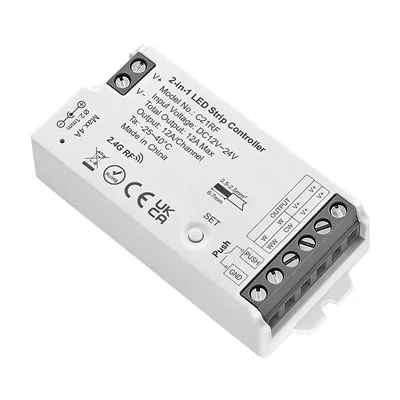
If you’re planning a cabinet lighting project, whether it’s a small kitchen remodel or a commercial display installation, and you have questions about input voltage, driver sizing, or specific products, feel free to reach out to discuss your needs.
Wired Sensor Switch References
- National Electrical Code (NEC) Article 410: Lighting Systems, 2023 Edition
- LED Lighting Association (LEDA) Technical Report: Driver Specifications for Indoor Cabinet Lighting, 2022
- International Electrotechnical Commission (IEC) 61347-2-13: Safety Requirements for LED Modules and LED Drivers, 2020 Edition
Dongguan Lanbaoli Intelligent Technology Co., Ltd.
As one of the most professional cabinet led driver manufacturers and suppliers in China, we’re featured by quality products and low price. Welcome to buy advanced cabinet led driver for sale here from our factory. If you have any enquiry about quotation, please feel free to email us.
Address: 10th Floor, Building 32, Golden Town, No. 7 Technology Avenue, Houjie Town, Dongguan City, Guangdong Province
E-mail: anna@lampow.cn
WebSite: https://www.lblsensor.com/
