When I started my rooftop artificial turf supply business, I didn’t just sell grass— I listened to so many building owners and property managers going back and forth on the biggest rooftop choice: turf vs. rubber roofing. You’d be shocked how many people assume rooftop turf is just a fun, fancy gimmick, and rubber roofing is the only “smart” practical pick. But after years of installing both, talking through their pain points, and testing with actual building maintenance teams, I can tell you it’s not that black and white. Let’s break this down like we’re at a coffee shop—no jargon, no marketing fluff, just real stuff from someone who’s actually in the game. Rooftop Artificial Turf

First, let’s get the basics straight for anyone who might not know: rooftop artificial turf for commercial or residential rooftops isn’t the same as the grass in your backyard. It’s specifically engineered to hold up to sun, wind, temperature swings, and foot traffic from people hanging out, tending to planters, or even small maintenance vehicles. Rooftop rubber roofing, on the other hand, is typically EPDM (ethylene propylene diene monomer) or TPO (thermoplastic olefin) — those stretchy, membrane-like sheets most folks use for flat rooftops because they’re supposed to be waterproof and low-maintenance. Now let’s dive into the stuff that actually matters when you’re picking one: durability, cost, the vibe it adds, and long-term headaches.
Durability is where a lot of assumptions get flipped. I’ve heard rubber roofing sales reps say turf will rot or get ruined in rain, but that’s only if you get cheap backyard turf. Commercial rooftop turf we supply has a polypropylene backing that’s fully permeable, so water drains right through—no pooling, no mold under it. We’ve had installs on rooftops in Florida, where daily downpours are nonstop, that are still going strong after 7 years. Rubber roofing? It’s tough too, but it’s not indestructible. Sharp tools falling from maintenance crews, foot traffic from contractors walking across it, even extreme temperature changes can cause cracks or tears. Last year, a property manager I worked with had his rubber roof punctured by a worker dropping a ladder; the fix cost him $1,200 in patching plus a day of downtime. With turf, that same kind of impact? The fibers bounce back, and any small damage is super easy to repair—just swap out a 1-foot section of turf instead of a big stretch of membrane.
Cost is another big one, but you can’t just look at the upfront price tag. Upfront, I’ll be honest: commercial rooftop turf is usually a bit more expensive than a basic rubber roof. Most turf installs run $8–12 per square foot, while EPDM rubber is $5–9 per square foot upfront. But wait—let’s talk about the hidden costs no one tells you. Rubber roofs need regular inspections every year, usually $300–$500 a pop, and any repairs add up. They also last about 15–20 years, right? Turf, if it’s the commercial grade we sell, lasts 10–15 years. So over 15 years, let’s do the math quick: upfront turf is $10 per sq ft, total maintenance $500, so average $7.70 a year per sq ft. Rubber is $7 upfront, $500 in inspections, $1,500 in repairs over 15 years, so average $8.75 a year per sq ft. Turf actually works out cheaper long-term. And don’t forget the added value: tenants will pay more for a rooftop lounge with turf than a plain rubber roof—we’ve had multiple property owners tell us their rental rates went up 10% right after installing turf. That’s a revenue boost rubber can’t touch.
Then there’s the environmental side, which is huge right now with green building codes popping up everywhere. A lot of people think turf is plastic garbage, but modern commercial turf is made from recycled materials—we use turf that’s 95% post-consumer plastic, like old water bottles, and when it’s at the end of its life, we take it back to recycle it into new turf. Even better: turf acts as a little insulator for your roof. We did a test with a client in Chicago last summer—their rooftop with turf stayed 12 degrees cooler than the rubber roof next door. That means lower AC bills for the building, less heat island effect, and it actually helps extend the life of your roof membrane if you do have one under it, because it’s not baking in direct sun 24/7. Rubber roofing’s environmental side? It’s not bad, but EPDM is hard to recycle—most old rubber roofs end up in landfills. And while rubber is waterproof, it doesn’t do anything for heat; it can get so hot in summer that it adds to your building’s cooling load.
Wait, let’s talk about the stuff that makes turf a no-brainer for a lot of people: the rooftop space itself. So many building owners are turning rooftop spaces into outdoor offices, pet areas, event spaces, or even community gardens. Plain rubber is cold, hard, and slippery when it gets wet or icy. Turf is soft, non-slip, and looks like actual outdoor space. I had a client who turned his rooftop into a dog park for his office’s employees—said turf was way easier on dog paws than rubber, no more slips when it rains. Another one who hosts rooftop parties: no more worrying about people tracking mud (turf doesn’t hold mud) or getting their shoes dirty. The only downside we mention to people? If you want a super minimalist, utilitarian rooftop with no foot traffic just for HVAC units, rubber is way more practical. But if you’re using your rooftop for anything beyond equipment, turf wins for function too.
Now, let’s be real—rubber isn’t useless. For flat rooftops that are only used for mechanical stuff, rubber’s waterproofing is top-notch, and it’s great for that. It’s also super thin, so if you’re worried about roof load (weight), rubber is lighter than turf sometimes—wait, that’s a key point I almost missed. Turf is a bit heavier, so if your building’s structure is old and can’t support extra weight, rubber might be the call. But most modern commercial buildings can handle turf’s weight, which is about 2 lbs per sq ft, way less than a few inches of gravel or planters. Another rubber win: if you’re in a super rainy area, some people worry about turf’s drainage, but again, commercial turf is perforated—we install drainage layers under it if needed, so no pooling. I’ve never had a turf install leak; pooling water is only a problem if you skip the drainage prep, same as any roof.
I’ve had so many customers come to me after trying rubber and hating it. One guy had his rubber roof get so slippery in the winter, two maintenance workers fell off (thankfully not seriously) while checking HVAC units. He switched to turf, and said now even in snow, the rooftop is safe to walk on. Another one who tried to grow a rooftop garden on rubber: the rubber leaches chemicals into the soil, so his tomatoes never grew right. Turf’s backing is safe, no leaching, so you can put planters right on it—way easier for gardeners.
Of course, it’s not all perfect for turf. If you’re in an area with super high foot traffic, like a rooftop that’s used 24/7 by a lot of people, you might need to go with a thicker turf pile, which costs a bit more. And if you’re looking for a totally seamless, industrial look, rubber might fit better—turf is soft and lush, so it’s more for people who want a nice outdoor vibe. But that’s the thing: it all comes down to what you’re using your rooftop for.
A common mistake I see people make is only looking at upfront cost. I had a small business owner last year who chose rubber because it was $2,000 cheaper upfront, but six months later, a storm tore a hole in his rubber roof and he had to spend $5,000 to fix it and replace a few HVAC parts that got water damage. If he’d gone with turf, the hole would’ve been in the turf, easy to fix, and no water damage. That’s the hidden cost everyone skips.
Another thing: maintenance. Turf is way easier to clean than you think. You just hose it off once a month, maybe rake leaves every few weeks. No power washing required, no chemicals. Rubber needs regular power washing to prevent algae growth, because once algae sets in, it eats away at the rubber membrane over time. We once had a rubber roof customer who skipped power washing for two years, and his roof had to be replaced early because of algae damage. That’s another big hidden cost.
So when you’re picking between rooftop artificial turf and rubber roofing, don’t just go by what the sales rep tells you. Ask yourself: what’s this rooftop for? Is it just for equipment, or are we turning it into usable space? What’s my budget for long-term repairs and maintenance? Is sustainability important to me or my tenants?
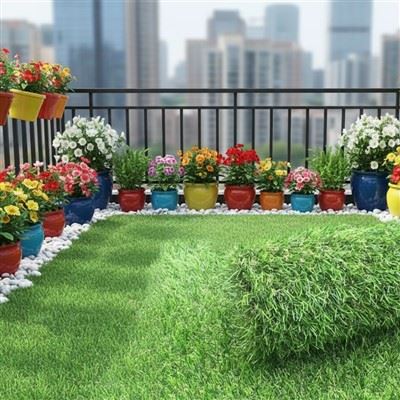
If you want a usable rooftop that adds value, saves money long-term, and is good for the environment, rooftop artificial turf is the way to go. If you have an old building that can’t handle extra weight, or you only need a plain roof for machinery, rubber works. But here’s the thing: most people come to me because they want to actually use their rooftop, not just look at it from the window. And turf delivers on that way better than rubber.
Backyard Artificial Turf If you’re thinking about switching or installing a new rooftop surface, I’d love to walk you through the options, answer all your questions, and give you a free, no-obligation quote. We’ve installed everything from small residential rooftop patios to large commercial office rooftop parks, so we’ve seen it all. No pushy sales stuff, just honest advice from someone who’s been in this for years.
References
- National Roofing Contractors Association. (2022). Commercial Rooftop Membrane Performance & Lifespan Study.
- Synthetic Turf Council. (2023). Environmental Benefits of Commercial Rooftop Synthetic Turf.
- U.S. Department of Energy. (2021). Cool Roofs: Rooftop Surface Material Impact on Building Energy Use.
- Building Owners and Managers Association. (2022). Rooftop Amenity Value and Tenant Retention Report.
- International Code Council. (2023). Rooftop Load Requirements for Commercial Structures.
Yiwu Duofu Artificial Flower Co., Ltd.
As one of the most professional rooftop artificial turf manufacturers and suppliers in China, our products have good reputation in the market. Please feel free to wholesale bulk custom made rooftop artificial turf from our factory. Good service and quality products are available.
Address: Building B, No. 566 Chunhua Road
E-mail: 13373813738@aliyun.com
WebSite: https://www.chinaturffactory.com/
