Hey there! I’m a supplier of Sodar (Sonic Detection and Ranging) systems. You might be wondering, "Can Sodar be used for studying the nocturnal boundary layer?" Well, let’s dive right in and explore this question. Sodar
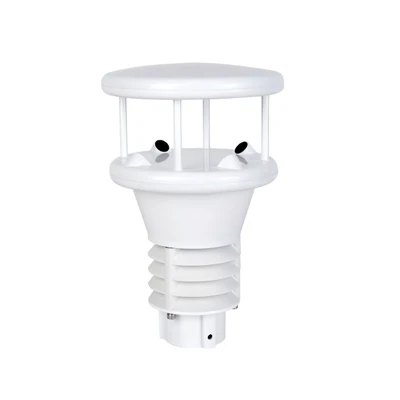
First off, let’s talk a bit about the nocturnal boundary layer. It’s that part of the atmosphere close to the ground during the night. Unlike the daytime boundary layer, which is often well – mixed due to solar heating and convection, the nocturnal boundary layer is more complex. At night, the ground cools rapidly by radiating heat away into space. This leads to the formation of a stable layer near the surface, where temperature increases with height, which is the opposite of what usually happens during the day.
Now, why is studying the nocturnal boundary layer important? It has a huge impact on various environmental and meteorological processes. For example, it affects air quality. Pollutants can get trapped in the stable nocturnal boundary layer, leading to higher concentrations near the surface. It also plays a role in weather forecasting. Understanding the structure and dynamics of the nocturnal boundary layer can help us predict things like fog formation, low – level wind changes, and even the dispersion of agricultural sprays.
So, can Sodar help with all this? The answer is a big yes! Sodar works by emitting short pulses of sound waves into the atmosphere. These sound waves bounce off small fluctuations in the air’s refractive index, which are mainly caused by variations in temperature, humidity, and wind. By measuring the time it takes for the sound waves to return and the frequency shift of the returned waves (Doppler effect), we can get information about the wind speed, direction, and turbulence in the atmosphere.
One of the great things about Sodar is its ability to provide continuous, real – time data. During the night, when other measurement methods might be limited, Sodar can keep on working. For instance, traditional meteorological masts have a limited height and can only measure conditions at fixed points. In contrast, Sodar can profile the atmosphere up to several hundred meters, giving us a more comprehensive picture of the nocturnal boundary layer.
Let’s look at some of the specific ways Sodar helps in studying the nocturnal boundary layer.
Wind Profiling
Wind is a key factor in the nocturnal boundary layer. The stable layer near the surface can cause the wind to change direction and speed at different heights. Sodar can accurately measure the wind profile, showing how the wind varies from the ground up to a few hundred meters. This information is crucial for understanding how pollutants are transported and dispersed at night. For example, if there’s a power plant or an industrial facility, knowing the wind profile in the nocturnal boundary layer can help us predict where the pollutants will go and how long they’ll stay in the area.
Turbulence Detection
Turbulence is another important aspect of the nocturnal boundary layer. It plays a role in mixing the air and can affect the vertical transport of heat, moisture, and pollutants. Sodar can detect the level of turbulence in the atmosphere by analyzing the backscattered sound signals. Higher levels of turbulence usually indicate a more unstable layer, which can lead to better mixing of pollutants. On the other hand, low levels of turbulence in the stable nocturnal boundary layer can cause pollutants to accumulate near the surface.
Boundary Layer Height Estimation
Determining the height of the nocturnal boundary layer is essential for understanding its overall structure. Sodar can help with this by detecting the changes in the wind and turbulence characteristics with height. The boundary between the stable layer near the surface and the more turbulent layer above can often be identified from the Sodar data. This height information is useful for air quality models and weather forecasting.
Case Studies and Real – World Applications
There have been several studies that have successfully used Sodar to study the nocturnal boundary layer. In one study in a rural area, researchers used Sodar to monitor the wind and turbulence in the nocturnal boundary layer over a period of several months. They found that the wind direction changed significantly at night, and the turbulence was much lower compared to daytime conditions. This information helped them understand how agricultural pollutants, such as pesticides, were being transported and dispersed in the area.
In an urban environment, Sodar has also been used to study the impact of the nocturnal boundary layer on air quality. By continuously monitoring the wind and turbulence, researchers were able to identify periods when pollutants were getting trapped near the surface. This information was used to develop strategies to reduce air pollution in the city, such as adjusting traffic patterns or industrial emissions during these critical periods.
Advantages of Our Sodar Systems
As a Sodar supplier, I’m really proud of the systems we offer. Our Sodar units are designed to be highly reliable and easy to operate. They have a long – range capability, which means they can provide accurate data up to several hundred meters in the atmosphere. The data is presented in a user – friendly format, making it easy for researchers, meteorologists, and environmental scientists to analyze and interpret.
We also offer excellent customer support. If you have any questions about setting up the Sodar system or analyzing the data, our team of experts is always ready to help. We can provide training on how to use the system effectively and offer maintenance services to ensure that your Sodar unit is always in top condition.
Cost – Effectiveness
Another important factor is cost – effectiveness. Compared to other methods of studying the nocturnal boundary layer, such as using aircraft or lidar systems, Sodar is a much more affordable option. It doesn’t require expensive fuel or specialized pilots, and the initial investment and operating costs are relatively low. This makes it accessible to a wider range of users, including small research institutions and local environmental agencies.
Future Prospects
The future of using Sodar for studying the nocturnal boundary layer looks really promising. With advances in technology, we can expect even more accurate and detailed data from Sodar systems. For example, new algorithms are being developed to better analyze the Sodar data and provide more information about the vertical structure of the atmosphere.
There’s also potential for integrating Sodar data with other types of data, such as satellite imagery and ground – based sensors. This can give us a more complete picture of the nocturnal boundary layer and its interactions with other parts of the atmosphere.
So, Should You Consider Investing in a Sodar System?
If you’re involved in research related to the nocturnal boundary layer, whether it’s air quality studies, weather forecasting, or environmental monitoring, a Sodar system could be a great addition to your toolkit. It provides real – time, continuous data that can help you better understand the complex processes occurring in the nocturnal boundary layer.

Our Sodar systems are designed to meet the needs of various users, from academic researchers to industrial companies. We can customize the system based on your specific requirements, whether it’s the range of measurement, the frequency of data collection, or the type of data output.
Meteorological Sounding System If you’re interested in learning more about how our Sodar systems can be used for studying the nocturnal boundary layer, don’t hesitate to get in touch. We’d be more than happy to have a chat with you, answer your questions, and discuss how our products can fit into your research or monitoring projects. Let’s work together to unlock the mysteries of the nocturnal boundary layer and make our environment a better place!
References
- Stull, R. B. (1988). An Introduction to Boundary Layer Meteorology. Kluwer Academic Publishers.
- Drobinski, P., & Samson, R. (2003). The nocturnal boundary layer: A review. Atmospheric Research, 69(1 – 2), 25 – 51.
- Banakh, V. A., & Mironov, D. V. (2001). Methods for remotely measuring turbulence in the atmospheric boundary layer. Boundary – Layer Meteorology, 99(1 – 2), 1 – 32.
Tianjin Blooming Technology Ltd.
Address: Main Building, No. 10 Wuhua Road, Huayuan Industrial Zone, Binhai High-tech Zone, Tianjin, China
E-mail: sales@blooming-tech.com
WebSite: https://www.blooming-tech.net/
